

Brazil
Country: Brazil Brazil
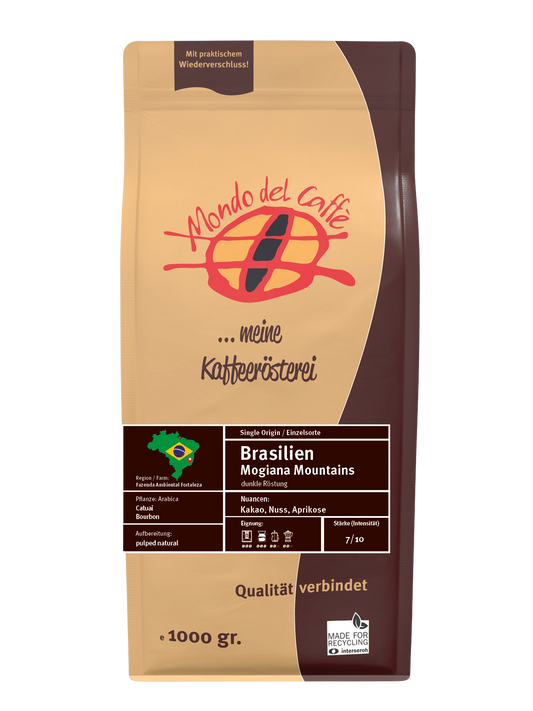
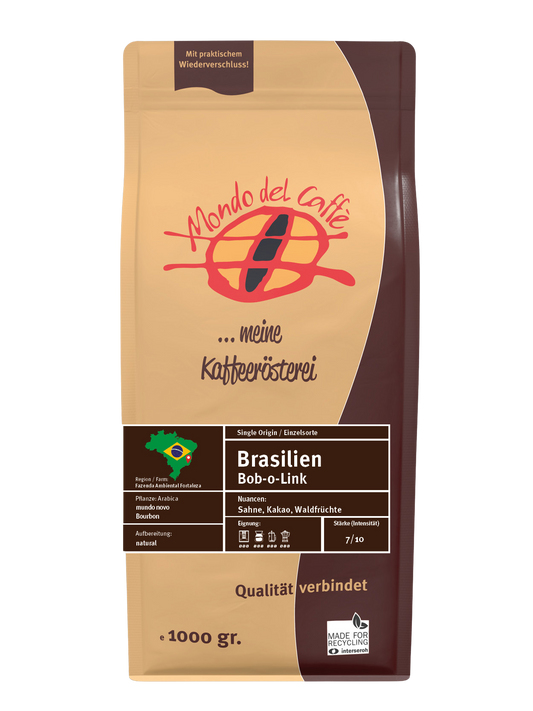
Fazenda Ambiental Fortaleza
Farm: Fazenda Ambiental Fortaleza
Minas Gerais – Mogiana Mountains, Sao Paulo
Region: Minas Gerais – Mogiana Mountains, Sao Paulo

The Bob-o-Link Farmers Initiative is an association of family-run coffee farms, initiated by the historic coffee farmFazenda Ambiental Fortaleza (“Environmental Fortress”)in the Mogiana Mountains of the state of Sao Paulo, Brazil. As early as 1999, this farm was converted by Marcos Croce and his family to organic coffee cultivation in harmony with nature – symbolized by the bobolink, a migratory bird native to North and South America.

Bob-o-Link CoffeeIt originates in one of the highest-altitude coffee-growing regions of Brazil. The family farms of the producer cooperative are situated between 900 and 1,250 meters above sea level. The coffees are not intended to be uniform mass-produced products – therefore, the farmers strive to bring out the unique characteristics of the different growing locations.

The coffee varieties used for the Bob-o-Link – Yellow and Red Bourbon, Catuai, and Mundo Novo – are among the best in the world. The coffee cherries are hand-picked at their peak ripeness. They are then expertly sun-dried (naturally processed).

Variety
Bourbon (red and yellow) / Catuai
Height
900 – 1,250 meters
Processing
natural
Grading/Additional
no addition
Screen
15 up (14/15/16 / 17 / 18 / 19 /20)
Harvest time
December – March
Harvest type
Selective pick / stripping
Drying
Raised bed / terrace

sustainability

The green coffee beans for the Bob-o-Link come from family farms, some organic, some conventional, but all in a long-term transition to more sustainable farming practices. It's becoming clear that the transition from 200 years of plantation farming isn't happening as quickly as planned, partly due to economic constraints (increased labor costs with rising wages, reduced yields and transaction costs when converting to organic farming, and low market prices for organic produce). Therefore, we don't put pressure on our partners.

Besides environmentally friendly coffee production, it is the stated goal of all family farms to restore the ecological balance of the original large plantation region. This includes planting rainforest trees and protecting waterways. Ultimately, this also helps preserve the habitat of the rice bird, the bobolink.

The families cultivate coffee in the fertile soils shaded by rainforest trees. They also take great care to protect the habitats of native animals, plants, springs, and waterways, and therefore refrain from using pesticides.