Sustainable Transportation

Coffee by sailing ship

For us, sustainability doesn't end with coffee cultivation and packaging. It also applies to the journey green coffee takes to reach us in Echternach. That's why some of our coffees don't travel on a container ship but instead cross the Atlantic by cargo sailing ship. Without fossil fuels. With four times less CO₂ than on the conventional sea route.

Conventional ocean transport is one of the biggest polluters worldwide: Shipping accounts for around 3% of global CO₂ emissions and is responsible for 20% of global sulfur dioxide and nitrogen dioxide emissions. Container ships generate underwater noise of up to 102 decibels, which is proven to disrupt the sonar systems of whales and other marine animals.

Cargo sailing ships don't fully solve this problem, but they do make a crucial difference:

  • Four times less CO₂

    A cargo sailing ship emits only 21g of CO₂ per kilogram of goods transported. A container ship emits 82g – that's four times as much.

  • No ship noise

    Sailing ships move without engines running. No noise to disturb life underwater.

  • No dependence on oil prices

    The wind is free and inexhaustible. Sailing ships are independent of freight rates and oil price fluctuations.

  • Improved quality due to ventilated cargo holds

    No transshipment, direct routes, on-board temperature control. The green coffee travels as gently as possible.

Our partner: Belco & TOWT

We source the sailing-transported coffees in our range through our green coffee partner Belco from France. Belco collaborates with the specialist company TOWT (TransOceanic Wind Transport) for sailing transport, which operates genuine 80-meter-long cargo sailing ships. These vessels move essentially exclusively by their sails and offer a capacity of around 940 tons.

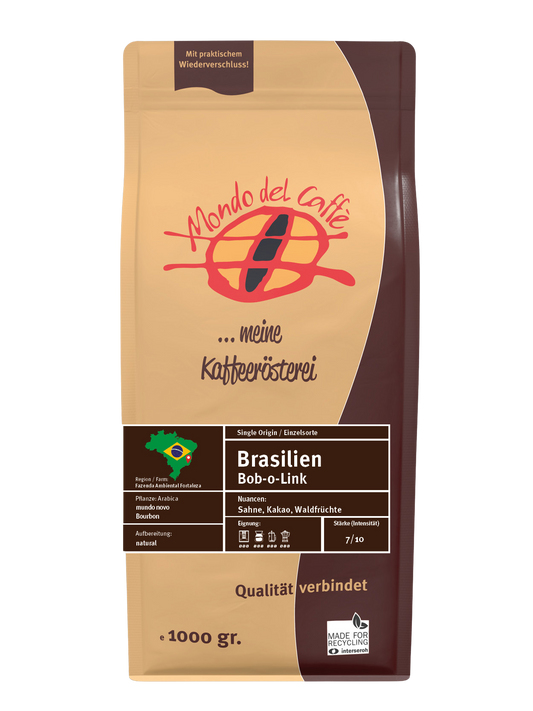
The coffees travel routes from Colombia and Brazil across the Atlantic to France, from where they reach us in Echternach.

Frequently Asked Questions

Why is coffee shipped by sail more expensive?

Sail transport currently incurs additional costs of around 1 euro per kilogram of green coffee compared to conventional container transport. For a 250g bag, this corresponds to a surcharge of about 30 cents. A small amount for a significantly reduced ecological footprint.

Does the coffee taste different because it came by sailboat?

The transportation route does not negatively affect quality; quite the opposite. The ventilated cargo holds of the sailing freighters and the avoidance of multiple transshipments protect the green coffee. As with all our coffees, the flavor characteristics are determined by the growing region, the processing, and our gentle drum roasting in Echternach.

Which routes are used to transport the coffee?

Our partner Belco's ships currently connect Colombia and Brazil with France across the Atlantic. From there, the coffees reach us in Echternach.

How do I recognize sail-transported coffees in the shop?

All coffees transported by sailing ship are marked in the shop with the label "FRESH COFFEE CLEAN OCEAN" for sail transport.

Coffee that takes responsibility on multiple levels.

Shipping by sail is one of many conscious decisions we make at Mondo del Caffè. Our coffees are EU organic certified, many according to the strict Demeter guidelines. We have been trading directly with farmers for over 20 years, without any intermediaries. And our packaging is made from 100% recyclable mono-material.

Discover our entire selection and choose the coffee that suits you and your values.

You can read more about our commitment to sustainability here: